
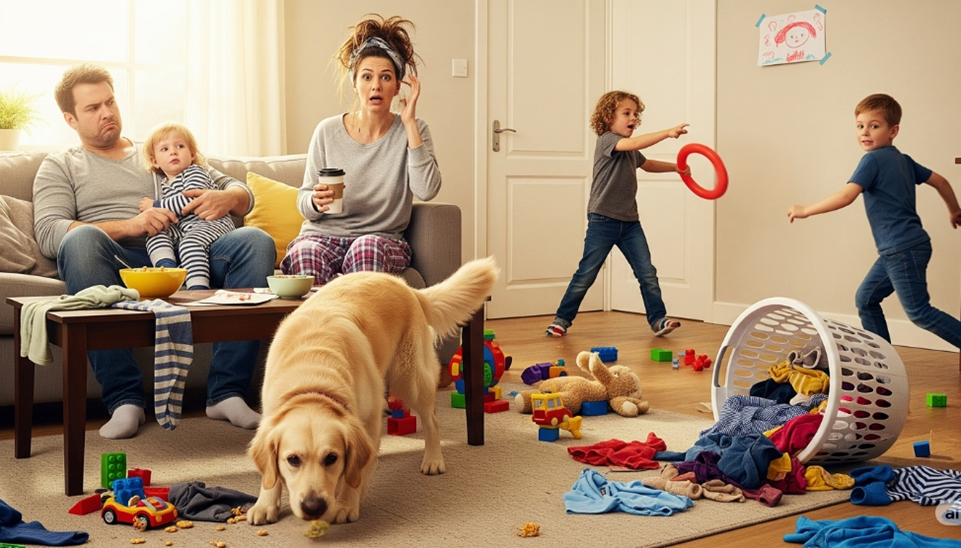
Listen up, parents. We’re all losing our minds here, so let’s at least do it together. Being a parent is like being a referee in a boxing match where both fighters are on fire, the ring is collapsing, and someone keeps asking you if you remembered to pack snacks. Stress management isn’t just crucial; it’s the difference between maintaining a shred of sanity and ending up muttering to yourself in the grocery store cereal aisle.
As a frazzled mom or grumpy dad (and let’s be honest, we’re ALL grumpy dads at some point), you’ve probably felt like you’re one temper tantrum away from running away to join the circus. But here’s the thing: even circus performers have to deal with difficult audiences, so we might as well stick with the devil we know.
This comprehensive A Survival Guide for Busy Families offers practical Parenting Tips that actually work in the real world, you know, the one where your kids don’t follow the parenting book scripts and your coffee gets cold before you can take a sip.
Key Takeaways (Or: Things I Wish Someone Had Told Me Before I Had Kids)
- Effective Parenting Tips for stress management (that don’t require yoga or meditation retreats).
- Practical parenting advice designed specifically as A Survival Guide for Busy Families.
- Strategies for creating a harmonious home environment (or at least one where nobody’s crying).
- The importance of self-care (yes, hiding in the bathroom counts).
- Tips for managing family conflicts without losing your voice.
The Reality of Modern Parenting: Why We’re All Walking Zombies

Parenting today is like trying to solve a Rubik’s cube while riding a unicycle on fire. Modern families juggle work-life balance like they’re in a three-ring circus, except nobody bought tickets to this show, and the popcorn is stale. That’s exactly why every parent needs A Survival Guide for Busy Families.
The Time Crunch: When 24 Hours Isn’t Nearly Enough
The biggest joke about modern parenting? Thinking you can balance work and family life without losing your mind. It’s like trying to fold a fitted sheet—theoretically possible, but in reality, we all just stuff it in the closet and hope for the best.
Between work demands that treat you like you don’t have kids and kids who act like you don’t have work, parents are stretched thinner than the last piece of cheese in a house full of teenagers. This time crunch leads to stress and guilt, because apparently, feeling inadequate is now a parenting requirement. These are the exact challenges that make Parenting Tips so essential for survival.
Accept that you can’t do everything perfectly. Your house doesn’t need to look like a magazine spread—unless that magazine is “Real Homes Where People Actually Live.”
Emotional Burnout: When Your Patience Tank Hits Empty
Emotional burnout is what happens when you’ve said “Because I said so” 47 times before breakfast and your eye starts twitching uncontrollably.
A eufy RoboVac running quietly while you relax can feel like the best parenting hack of all time. The constant juggling act between work, parenting, and trying to remember if you fed the dog can leave you feeling like a deflated balloon animal.
Recognizing the signs of burnout includes: finding yourself hiding in the pantry eating crackers, considering whether running away to become a lighthouse keeper is a viable career change, or feeling genuinely excited about grocery shopping alone. This is where having A Survival Guide for Busy Families becomes a lifesaver.
If you catch yourself negotiating with a toddler about pants, you’ve reached peak burnout. Time for reinforcements (or wine).
The Impact of Parental Stress on Family Dynamics
When parents are stressed, the whole family feels it. It’s like emotional weather—when Mom or Dad is stormy, everyone’s reaching for umbrellas. Parental stress affects relationships faster than a kid can track mud through a freshly mopped kitchen.
Understanding this impact is the first step toward not raising the next generation of therapy patients. A YETI Rambler Tumbler is a parent’s best friend when you want that coffee to stay hot longer than 3 minutes.
A quick shoulder massage from a TheraGun Mini, or sipping a Calm magnesium drink mix before bed, these little things add up and keep you going.
Because let’s face it, we all want our kids to blame us for normal things like embarrassing dad jokes, not legitimate psychological damage.
Essential Parenting Tips for Keeping Your Sanity (What’s Left of It)

Maintaining sanity as a parent is like trying to keep ice cream frozen in a volcano. But with the right strategies from our A Survival Guide for Busy Families, you can at least slow down the melting process.
Setting Realistic Expectations (Or: Lowering the Bar)
The primary source of parental stress? Expecting your family to function like those perfect families in commercials. News flash: those kids are paid actors, and they probably threw tantrums between takes too. One of the most valuable Parenting Tips is learning to adjust your expectations.
Adjusting Standards Without Guilt
Perfect is the enemy of good, and good is the enemy of “done.” By adjusting your standards from Pinterest-perfect to “nobody died and everyone ate something that wasn’t candy,” you can actually enjoy your family instead of constantly failing to meet impossible expectations. If your kids are fed, clothed, and haven’t been arrested, you’re winning. Everything else is bonus points.
Age-Appropriate Expectations for Kids
Understanding what’s realistic for your child’s age can save you from the futile exercise of expecting a 3-year-old to have the emotional regulation of a Buddhist monk. Spoiler alert: they don’t.
For example, expecting a toddler to sit quietly for an hour is like expecting a goldfish to do your taxes—technically they both have brains, but let’s be realistic about capabilities here.
Creating Consistent Routines (That You Can Actually Stick To)
Consistent routines provide security for kids and prevent parents from having to make 847 decisions before noon.
Tools like a magnetic fridge calendar or a Time Timer visual clock can help kids understand routines and take some load off parents.
And when it comes to bedtime? Hatch Rest+ sound machine or the MELLA sleep trainer are small investments that pay off in big ways by helping kids wind down faster.
A good routine is like autopilot for family life—less thinking, more surviving. The best routine is one you can maintain even when you’re running on three hours of sleep and spite. This is one of the foundational Parenting Tips that every A Survival Guide for Busy Families should emphasize.
Key routine elements that actually work:
- Create a morning routine that doesn’t require you to be cheerful before coffee
- Establish a bedtime routine that ends with children actually in bed (revolutionary concept)
- Schedule regular family time where everyone pretends to like each other
The Power of Positive Reinforcement (AKA Bribery With Extra Steps)
Positive reinforcement sounds fancy, but it’s basically the parenting equivalent of giving your dog a treat when they don’t chew your shoes. Acknowledge good behavior immediately and enthusiastically, because kids respond to praise like plants respond to sunlight—they need it to grow properly.
For instance, when your child completes homework without being asked seventeen times, celebrate like they just discovered the cure for whining. Catch them being good and make a big deal about it. It’s cheaper than therapy later.
Consistency and immediate reinforcement work better than threats, bribes, or that look that says “I brought you into this world…”
Time-Saving Strategies: Parenting Tips for Parents Who Are Already Late for Everything

Effective time management for parents is like trying to herd cats while juggling flaming torches. But with the right strategies from this A Survival Guide for Busy Families, you can at least reduce the number of things on fire at any given moment.
Meal Planning: Feeding Your Family Without Losing Your Mind

Meal planning is the difference between “What’s for dinner?” causing a panic attack and having an actual answer that doesn’t involve drive-throughs. Planning meals in advance saves time, money, and the daily “staring into the fridge hoping food will magically appear” ritual.
Meal planning can be a game-changer. Using tools like the Instant Pot Duo makes weeknight cooking fast and stress-free, while even something fun like a Presto Belgian Waffle Maker can turn chaotic mornings into happy family moments. And for keeping snacks fresh and organized, those OXO POP containers on the counter are lifesavers.
15-Minute Meal Ideas for When You’re Too Tired to Function
- One-Pot Pasta: Throw pasta, sauce, and protein in one pot. If it’s edible and nobody complains, you’ve won the dinner lottery.
- Tacos: Pre-cooked meat + tortillas + whatever vegetables haven’t gone bad = dinner heroes everywhere thank you.
- Stir-Fry: Vegetables, protein, soy sauce, rice. It’s impossible to mess up, and kids think you’re fancy.
Cereal is a valid dinner option. It has grains, dairy, and if you add fruit, it’s basically a complete meal. Fight me.
Involving Kids in Meal Preparation
Getting kids involved in cooking teaches them life skills and makes them less likely to complain about the food. Win-win situation, unless you count the extra cleanup time, in which case it’s more like win-lose-but-still-worth-it.
Assign age-appropriate tasks: little kids can wash vegetables (badly) and older kids can handle knives (carefully). The key is accepting that “help” from children often makes things take twice as long but builds character (yours and theirs).
Streamlining Morning and Bedtime Routines (The Daily Survival Challenges)
Morning and bedtime routines can make or break your day. For mornings, prepare everything the night before because morning-you is not the same person as evening-you, and morning-you has the decision-making capacity of a confused hamster. These essential Parenting Tips are crucial elements of any A Survival Guide for Busy Families. The bedtime routine isn’t about getting kids to sleep—it’s about establishing who’s in charge. Spoiler: it’s not you, but we pretend anyway.
| Routine | Morning | Bedtime |
| Preparation | Lay out clothes and pack lunches | Start the wind-down process before anyone is actually tired |
| Consistency | Same wake-up time every day | Same bedtime routine, even when it feels pointless |
Delegating Chores: Teaching Kids That Life Isn’t a Hotel Service
Delegating chores to children teaches responsibility and reduces your workload.A Melissa & Doug Responsibility Chart makes it easier for kids to visualize tasks, while you sit back and (if you’re lucky) enjoy some quiet coffee.
If they’re old enough to make the mess, they’re old enough to clean it up. This applies to everything from toys to life choices.
Plus, it prepares them for the shocking revelation that laundry doesn’t wash itself and dishes don’t magically jump into the dishwasher.
Age-appropriate chore assignments:
- Younger kids (4-6): Picking up toys, feeding pets, helping set the table (expect broken dishes)
- Older kids (7-10): Laundry folding, basic meal prep, bathroom cleaning (they made the mess, they can clean it)
Self-Care for Parents: It’s Not Selfish, It’s Strategic
Taking care of yourself isn’t selfish—it’s like putting on your oxygen mask first in an airplane. You can’t help anyone else if you’re passed out from exhaustion and running on fumes. Self-care is one of the most important Parenting Tips featured in this A Survival Guide for Busy Families.
Finding Moments for Yourself (In the Chaos)
Finding time for yourself as a parent is like finding matching socks—theoretically possible but practically challenging. Even small moments count: drinking coffee while it’s still hot, using the bathroom alone, or having a complete thought without interruption.
Sometimes, self-care is sitting in your car for five extra minutes after getting home from work. That’s valid. Consider waking up earlier than the rest of your family. Yes, it sounds terrible, but using this time to meditate, journal, or simply enjoy quiet can be the difference between starting your day as a human being versus starting it as a caffeinated zombie.
Nurturing Your Relationship (With Your Partner, Not Just Netflix)
Nurturing your relationship with your partner is crucial because you’re teammates in this parenting chaos. Regular date nights don’t have to be fancy—a walk around the block after bedtime counts if you’re actually talking to each other instead of comparing schedules.
Communicating openly about your needs and feelings is key, even if those feelings are “I haven’t slept in four years and I’m pretty sure I put the milk in the cabinet this morning.”
Setting Boundaries: Learning to Say “No” Without Apologizing
“No” is a complete sentence. You don’t need to explain, justify, or apologize for having limits. Learning to say no without guilt is a superpower that all parents need to develop. Setting boundaries with family, friends, and even your children prevents overcommitting and reduces stress. Prioritizing your own needs isn’t selfish—it’s maintenance.
A Survival Guide for Busy Families: Lowering the Bar Without Totally Dropping It
Let’s be honest: if parenting came with an instruction manual, most of us would have lost it by page two. That’s why A Survival Guide for Busy Families isn’t about perfection—it’s about finding ways to get through the day without losing your last nerve.
From dealing with meltdowns in the cereal aisle to pretending cereal is dinner (again), this guide is built for real parents living in the real world.
Here’s the truth: some days you’ll feel like a superhero, and other days you’ll be proud just to survive bedtime without crying harder than your kids. And that’s okay. Because surviving is winning—and sometimes winning means celebrating that everyone brushed their teeth… eventually.
Managing Family Conflicts and the Great Screen Time War

Family conflicts and technology battles are the modern parent’s equivalent of trench warfare, ongoing, exhausting, and nobody really wins.
Fire HD Kids Tablet, which gives kids safe screen time with built-in parental controls. If you want to go even bigger, a mesh Wi-Fi system like eero with parental controls lets you manage screen time for the entire household.
And when chaos spills into the car? A simple backseat car organizer with a tablet holder can save road trips and keep the peace.
That’s why conflict resolution strategies are essential Parenting Tips in any A Survival Guide for Busy Families.
De-escalation Techniques: When Everyone’s Lost Their Minds
De-escalating tantrums and arguments requires the patience of a saint and the negotiation skills of a hostage negotiator. Staying calm is crucial because when you lose it, everyone loses it, and suddenly you’re all having a group meltdown in the cereal aisle.
Techniques that actually work: active listening (even when what they’re saying makes no sense), remaining calm (fake it till you make it), and validating feelings (“I understand you’re upset that we can’t buy a pony”).
Sometimes the best de-escalation technique is strategic retreat. There’s no shame in saying “Let’s all take a break” and regrouping later.
Teaching Emotional Regulation (While Learning It Yourself)
Teaching children emotional regulation is like teaching someone to drive while you’re still figuring out the GPS. You’re both learning together, and there might be some bumps along the way.
Model the behavior you want to see, even if internally you’re screaming. Kids learn more from what you do than what you say, unfortunately.
Screen Time Management: The Never-Ending Battle
Managing screen time is like trying to hold back the ocean with a bucket, but we persist because we’re parents and persistence is basically our job description.
Age-Appropriate Technology Guidelines
| Age Group | Recommended Screen Time | Reality Check |
| Under 2 years | No screen time except video chatting | Good luck with that during a phone call |
| 2-5 years | 1 hour of educational content | Educational includes Bluey, right? |
| 6 and above | Consistent limits with focus on balance | May the odds be ever in your favor |
Creating Tech-Free Family Time
Designating tech-free times sounds great in theory. In practice, it’s like herding cats who’ve discovered caffeine. Start small: maybe dinner without devices, or one evening a week where everyone pretends phones don’t exist.
Lead by example. Put your own phone down first, then deal with the revolution that follows.
Conclusion: Building a Happier, Less Stressful Family Life
A happier family isn’t one without problems—it’s one where everyone knows they’re loved despite the chaos, the meltdowns, and the fact that someone always forgets to flush the toilet.
Creating a less stressful family life means accepting that some days you’ll nail the parenting thing, and other days you’ll serve cereal for dinner and call it a win. Both are valid outcomes.
The key Parenting Tips from this A Survival Guide for Busy Families boil down to this: set realistic expectations, delegate when you can, use positive reinforcement liberally, and remember that good enough is often perfect.
You don’t have to be perfect. You just have to show up, do your best, and remember that even the worst parenting day makes a great story later.
FAQ (Frequently Asked Questions From Exhausted Parents)
What are the most effective Parenting Tips for managing daily family chaos?
The most effective Parenting Tips include setting realistic expectations, creating consistent routines, and practicing self-care. This A Survival Guide for Busy Families emphasizes that even small changes like meal planning and positive reinforcement can dramatically reduce daily stress.
How can A Survival Guide for Busy Families help overwhelmed parents?
A Survival Guide for Busy Families provides practical, time-tested Parenting Tips designed specifically for parents who are juggling work, household responsibilities, and active children. These strategies focus on efficiency, stress reduction, and creating sustainable family routines.
What makes these Parenting Tips different from other parenting advice?
These Parenting Tips are designed for real families dealing with real challenges. Unlike idealistic parenting advice, this A Survival Guide for Busy Families acknowledges that perfection isn’t the goal—survival and happiness are.
How do I set boundaries without feeling guilty?
Guilt is the parenting tax we all pay, but boundaries are necessary for everyone’s wellbeing. Start small, be consistent, and remember that teaching your kids that adults have limits is actually good parenting.
How can I manage screen time without becoming the family villain?
Set clear, consistent rules and stick to them. Expect pushback (you’re dealing with tiny humans who don’t understand long-term consequences), but stay strong. You’re the parent, not the entertainment committee.
How do I nurture my relationship with my partner when we’re both exhausted zombies?
Small gestures matter: a text during the day, five minutes of actual conversation, acknowledging each other’s efforts. You’re both doing your best in impossible circumstances, and these Parenting Tips remind us that taking care of your partnership is part of taking care of your family.
How do I get my kids to help with chores without starting World War III?
Start early, keep expectations age-appropriate, and prepare for resistance. Eventually, they’ll learn that contributing to the household is just part of being in the family. Eventually. This is one of those Parenting Tips that requires patience but pays off in the long run.
Ready to Survive Parenting Tips (and Maybe Even Enjoy It)?
Parenting isn’t about picture-perfect homes and angelic kids—it’s about surviving tantrums in the cereal aisle, celebrating when dinner isn’t just Goldfish crackers, and occasionally hiding in the bathroom for five minutes of peace. That’s exactly what Parenting Tips for Frazzled Moms and Grumpy Dads: A Survival Guide for Busy Families is here for—keeping it real while helping you keep it together.
Here’s how to join the chaos (and maybe even laugh at it):
Dive into our blog for Grumpy Dad Travel Tales approved survival strategies, time-saving hacks, and the reassurance that yes, everyone else’s house is a mess too.
Hang out with us on Facebook: where exhausted parents swap tips, jokes, and the occasional cry-for-help meme.
Follow our Instagram for unfiltered snapshots of parenting reality—because staged “perfect” family photos are overrated anyway.
Have a go-to parenting trick or a meltdown moment that taught you something? Share your best Parenting Tips (or funniest fails) with us! We love connecting with other moms and dads who are figuring it out one day at a time—because every story, whether it’s chaos or genius, can help another parent survive the ride.