
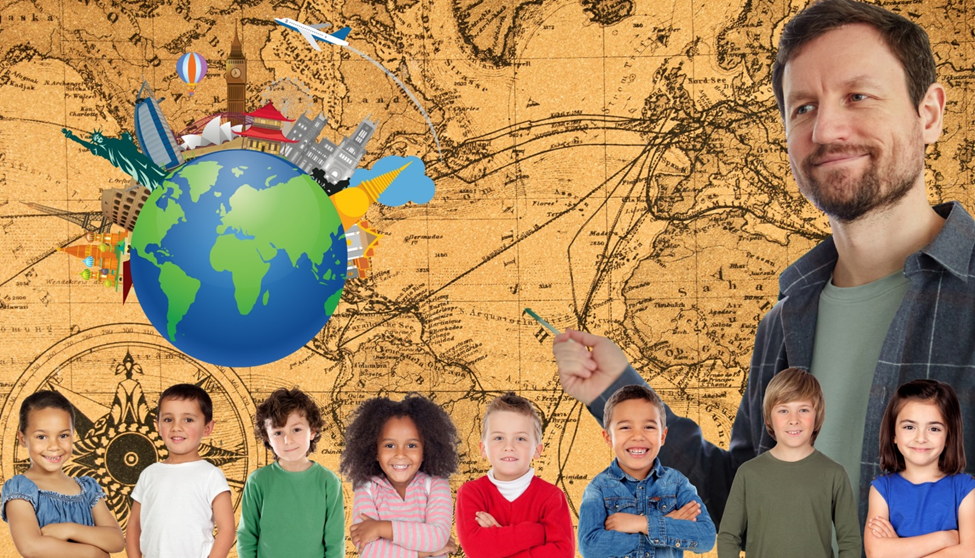
Did you know that while you’re complaining about wearing a jacket in winter, some kid on the other side of the planet is sweating buckets in summer? AT THE SAME TIME! Mind blown yet? No? Well, stick around, junior.
Look, back in my day, we had to walk uphill both ways to learn geography facts. Now you’ve got the internet, fancy apps, and me – your grumpy guide to this spinning rock we call home. So quit your whining and let’s learn something.
Key Takeaways (Because Your Attention Span is Shorter Than My Patience)
- Geography helps you understand why people in other countries don’t do things the “normal” way (spoiler: your way isn’t the only way)
- Learning about different climates explains why I’m always complaining about the weather
- World facts for kids can be fun (I know, I’m shocked too)
- Our planet is weirder than your Uncle Bob at Thanksgiving
- Maps aren’t just for getting lost anymore
Fascinating Planet Earth: Geography Facts That’ll Make You Go “Huh”

Alright, listen here. Earth isn’t just some boring ball of dirt floating in space. It’s got more personality than your mother’s book club combined.
Our Blue Planet: Why Earth Is the Cool Kid in the Solar System
They call Earth the “Blue Planet” because over 70% of it is covered in water. That’s right – more water than the time I accidentally left the garden hose on for three days. Unlike those other loser planets, Earth’s got oxygen, nitrogen, and Wi-Fi (okay, maybe not that last one everywhere, but we’re working on it).
How Maps Help Us Not Get Lost (Unlike That One Time in 92)
Maps used to be these big paper things that never folded back right. Now they’re on your phone, talking to you like some know-it-all backseat driver. However, here’s the thing – they help you understand where things are here’s the thing – they help you understand where stuff is. Revolutionary, I know.
Continent Countdown: All Seven of ‘Em (Yes, There Are Seven)
Time to tour the continents. Pack light – we’re moving fast.
Asia: Where Most People Live and Mountains Touch the Sky
Asia’s got Mount Everest – the tallest mountain that makes my backyard hill look like an anthill. It’s also home to 60% of the world’s people, which explains the traffic. From China’s cities that never sleep to temples older than my jokes, Asia’s got it all.
Africa: Where Humans Started and Lions Still Rule
Africa is basically humanity’s hometown. It’s where we all started before some of us decided to wander off and complain about the weather elsewhere. Plus, it’s got animals that make your pet hamster look boring – lions, elephants, giraffes, you name it.
The Americas: From Freezing Your Butt Off to Sweating Buckets
North and South America stretch from the Arctic (where even I wouldn’t complain about wearing a coat) to almost Antarctica. You’ve got the Amazon rainforest, which is like nature’s air conditioner, and the Grand Canyon, which is what happens when water gets really Patient.
Europe, Australia, and Antarctica: The Oddballs
Europe’s got more history than my garage has junk. Australia’s where animals evolved differently just to mess with us – kangaroos with pouches, really? And Antarctica? It’s colder than my wife’s stare when I forget our anniversary.
| Continent | What Makes It Special | Fun Fact That’ll Impress Nobody |
| Asia | Mount Everest | Has more people than parking spaces |
| Africa | Wildlife central | Where your great-great-great (add 10,000 more greats) grandparents lived |
| North America | Grand Canyon | Has both maple syrup AND tacos |
| South America | Amazon Rainforest | More species than I have complaints |
| Europe | Old buildings everywhere | Smaller than you think |
| Australia | Weird animals | Everything can kill you |
| Antarctica | Ice, ice, baby | Penguins dress better than most people |
Ocean Explorers: The Wet Stuff That Covers Most of Earth
The oceans are like that relative who takes up too much space at family gatherings – they’re everywhere, covering over 70% of the planet.
The Big Four: Pacific, Atlantic, Indian, and Arctic
We’ve got four main oceans, and before you ask, no, you can’t drink from any of them. The Pacific is the biggest show-off, larger than all land combined. The Atlantic is where I lost my favorite fishing rod in ’87. The Indian Ocean is warm enough to make soup, and the Arctic is where polar bears wonder why humans complain about cold weather.
The Mariana Trench: Earth’s Basement
The Mariana Trench is deeper than my thoughts when I can’t sleep at 3 AM – over 36,000 feet deep. That’s like stacking 120 football fields vertically. Even with all that pressure down there, weird fish still live there, proving life finds a way to exist anywhere – kind of like my in-laws.
Ocean Currents: Nature’s Lazy Rivers
Ocean currents are like underwater highways, except nobody’s asking, “are we there yet?” They move heat around the planet like a giant conveyor belt, which is why Britain isn’t a frozen wasteland despite being as far north as Canada.
Mountain Mysteries: Big Rocks That Make Me Feel Small

Mountains are Earth’s way of showing off. They’re big, dramatic, and make climbing stairs seem easy.
The Himalayas: Where Mountains Have Commitment Issues
The Himalayas are still growing – about an inch per year. At this rate, they’ll be taller than my list of complaints by 2050. Mount Everest sits up there at 29,029 feet, laughing at people who think climbing it is a good idea. The name “Himalaya” means “abode of snow,” which is Sanskrit for “bring a really warm jacket.”
Volcanoes: Earth’s Temper Tantrums
Volcanoes are what happen when Earth gets indigestion. They can create new land, destroy old land, and generally make a mess of things. Hawaii exists because of volcanoes, so I guess they’re not all bad. Just mostly bad. Like my cooking.
Grand Canyon: What Happens When You’re Patient
The Grand Canyon is 277 miles long and over a mile deep. It took millions of years to form, which is longer than it takes my wife to get ready for dinner. It’s proof that even water can carve through rock if it’s stubborn enough – kind of like me with a TV remote.
World Facts for Kids: Countries, Capitals, and Why People Are Weird Everywhere

Time to talk about countries and the strange ways people live in them.
Size Matters: From Russia to Vatican City
Russia is so big it has 11 time zones. ELEVEN! Meanwhile, Vatican City is so small you could walk across it during a commercial break. Both are countries, proving size doesn’t matter (that’s what I keep telling myself about my garden).
Capital Cities: Where Important People Pretend to Work
Capital cities are where governments hang out and make decisions that affect the rest of us. Some, like Rome, are older than dirt. Others, like Brasília, are younger than my favorite recliner. Tokyo’s so modern it makes me feel like a caveman, while Athens reminds me that humans have been complicated for thousands of years.
How People Live: Everyone’s Weird but Me
In Japan, they take their shoes off indoors (smart). In India, they eat with their hands (efficient). In France, they kiss cheeks to say hello (germy). Everyone thinks their way is normal, but trust me, kid – normal doesn’t exist.
Weather Wonders: From “Too Hot” to “Too Cold” and Everything I Complain About In Between
Weather is what I talk about when I run out of other complaints.
Climate Zones: Earth’s Mood Swings
Earth has different climate zones like I have different moods – tropical (grumpy and sweaty), desert (grumpy and dry), temperate (just grumpy), and polar (grumpy and frozen). Each zone supports different life forms, proving that life adapts better than I do to new situations.
Extreme Environments: Places That Make My Backyard Look Comfortable
Deserts can hit 134°F, which is hotter than my temper when someone touches my thermostat. Rainforests are so humid you could swim through the air. Tundra are so cold even penguins would complain (if they lived there, which they don’t – that’s Antarctica, pay attention).
Climate Change: Why Everything’s Getting Weirder
The planet’s warming up faster than my face when I realize I’ve been wearing my shirt inside out all day. Ice caps are melting, the weather’s getting crazier, and scientists are worried. Even I’m concerned, and I usually don’t care about anything that happens after my bedtime.
Natural Wonders: Stuff That Makes Even Me Say “Wow”
Sometimes Earth creates things so spectacular that even a grump like me has to admit they’re impressive.
Waterfalls: Nature’s Way of Showing Off
Victoria Falls is so big it creates its own weather system. Niagara Falls powers half of New York’s coffee makers (probably). These massive water features prove that even nature likes to make a splash.
Northern Lights: The Sky’s Screen Saver
The Northern Lights are what happens when the sun’s particles party with Earth’s magnetic field. It’s like a cosmic disco, but quieter and with better colors. Even I’d stay up past 8 PM to see them.
Coral Reefs and Caves: Hidden Treasures That Make Me Feel Like a Pirate
Coral reefs are underwater cities built by tiny animals that work harder than most people I know. Caves are Earth’s secret rooms, full of formations that took longer to make than it takes me to decide what to watch on TV.
Amazing Animals: Creatures That Adapted Better Than I Ever Will
Animals figured out how to live everywhere, unlike me, who complains when the temperature changes by two degrees.
Jungle Residents: The Noisy Neighbors
Rainforest animals include howler monkeys (aptly named), sloths (my spirit animal), and birds louder than my neighbor’s lawnmower at 6 AM. They’ve adapted to life in the trees, unlike me, who gets dizzy on a stepladder.
Desert Dwellers: The Tough Guys
Desert animals like camels can go weeks without water. Meanwhile, I panic if I forget my water bottle on a trip to the mailbox. These creatures have adapted to extreme heat and dryness, making them tougher than a two-dollar steak.
Polar Animals: The Real Cold Weather Champions
Polar bears, penguins, and seals live where it’s so cold my complaints would freeze mid-sentence. They’ve got thick fur, blubber, and attitudes that say “cold? What cold?” They make my winter jacket look like tissue paper.
People and Places: How Humans Messed with Geography (And vice versa)

Humans and geography have been in a complicated relationship since day one.
Ancient Civilizations: Smart Cookies Who Knew Location Matters
Ancient Egyptians built near the Nile because it flooded regularly (in a good way). Romans built roads everywhere because they were control freaks. These old-timers understood that geography could make or break a civilization, unlike my neighbor who built a pool in the shadiest part of his yard.
Modern Cities: Where Geography Still Calls the Shots
Cities still grow where geography makes sense. New York has a great harbor (and attitude). Las Vegas exists despite being in a desert because humans are stubborn. Geography influences where we live, work, and complain about traffic.
Cultural Geography: Why Everyone Else Is Weird
Mountains create isolated communities with unique languages (like teenagers). Rivers help cultures mix and trade ideas (and germs). Geography shapes how people live, eat, dress, and annoy each other. It’s why Italian food is different from Japanese food, and why I stick to sandwiches.
Record-Breaking Geography: The Extreme Places That Make Everything Else Look Normal
Earth doesn’t do anything halfway. It’s got the highest, lowest, deepest, and longest everything.
Death Valley and Everest: The Basement and Penthouse
Death Valley sits 282 feet below sea level, making it Earth’s basement. Mount Everest towers at 29,029 feet, making it the penthouse suite. One’s too hot, one’s too cold, and both make my living room look pretty good.
Lake Baikal and the Amazon: Deep Thoughts and Long Walks
Lake Baikal in Russia is deeper than my regrets – 5,387 feet deep. The Amazon River is about 4,000 miles long, which is longer than my list of things that annoy me (barely). These record-breakers show that Earth doesn’t believe in moderation.
Geography Games: Making Learning Less Painful Than a Root Canal

Fine, let’s make this fun since you kids can’t sit still for five minutes.
Map Puzzles and Apps: Geography for the YouTube Generation
Grumpy Dad Travel Tales has some geography games that won’t make your brain hurt too much. Map puzzles teach you where countries are without the boring lectures. Geography apps make learning feel like playing, which is cheating but I’ll allow it.
DIY Projects: Getting Your Hands Dirty (The Good Way)
Make a volcano that erupts (outside, not in my living room). Build a 3D map with clay and paint. Create your own treasure map of your neighborhood. These projects teach geography facts while keeping your hands busy and off my remote control.
Frequently Asked Questions (Because You Kids Never Stop Asking)
Q: What are “World Facts for Kids,” and why do they matter?
A: Kid-friendly geography facts (continents, oceans, countries, climates, time zones, cultures) that explain where things are and why—so maps, seasons, travel, and news make sense (and you don’t mix up Austria with Australia).
Q: Why should I care about geography when I have GPS?
A: Oh, you trust that little voice in your phone? What happens when the battery dies, genius? Geography helps you understand WHERE you are and WHY things are the way they are. Plus, knowing that Australia is not next to Austria might save you from looking like a complete donut someday.
Q: Is geography just memorizing capitals and rivers?
A: No, that’s like saying cooking is just turning on the stove. Geography explains why your cousin in Arizona thinks 70°F is freezing while you’re wearing shorts. It’s about understanding how the world works, not just memorizing facts like some kind of human Wikipedia.
Q: What’s the point of learning about other countries?
A: Because the world doesn’t revolve around your zip code, kiddo. Understanding other places helps you realize why people do things differently. Plus, when you’re older and traveling (or trying to impress someone), you won’t be that person who thinks Paris is a country.
Q: How do I remember all these world facts for kids?
A: Same way I remember where I left my glasses – make it matter to you. Connect facts to things you care about. Mount Everest is about 29 Empire State Buildings tall. The Amazon River could stretch from New York to Rome. Make it personal, make it stick.
Q: Why are there so many time zones?
A: Because the Earth is round (yes, it’s round) and the sun can’t shine everywhere at once. Russia has 11 time zones because it’s huge. It’s like having breakfast in one part while someone else is having dinner. Mind-blowing, right?
Q: Can geography help me in real life?
A: Can breathing help you stay alive? Geography helps you understand weather patterns (why it always rains on your birthday), why certain foods come from certain places, and why your online order takes forever from overseas. It’s more useful than algebra, I’ll tell you that.
Q: What are geography facts, and why should kids learn them?
Geography facts explain how the Earth works – from continents and oceans to climates and cultures. Learning them helps kids understand maps, weather, travel, and the world beyond their neighborhood.
Q: Why do different places have different climates?
A: Because Earth isn’t a perfectly controlled thermostat like I wish my house was. Distance from the equator, ocean currents, mountains – they all affect climate. It’s why I can’t grow palm trees in my backyard, no matter how much I yell at them.
Grumpy Dad’s Geography Gear: Stuff That Actually Works (Unlike My Old Atlas)
Look, I’ve wasted enough money on junk that promised to make kids smarter. Here’s what works when you’re trying to teach these little know-it-alls about the world without losing your mind.
Alright, listen up, you little geography geniuses.
You’ve survived my entire rant about this spinning rock we live on, which means you’ve either learned something or you’re good at pretending (like when I pretend to enjoy your school concerts).
Here’s the deal – I’ve got more complaints and travel wisdom to share than can fit in one article. Want to hear me grumble about why airport food costs more than my first car? How about geography facts that’ll make you the smartest kid at the lunch table? Or travel disasters that’ll make your worst day look like Disneyland?
Maps and Atlases (Because Screens Die, Books Don’t)
First up, the National Geographic Readers: World Atlas for Young Explorers – with over 1,000 reviews from parents who haven’t returned it yet. It’s got colorful maps that won’t make kids’ eyes glaze over like my old road maps do. Plus, it’s sturdy enough to survive being dropped, sat on, and used as a placemat (don’t ask).
For the really little ones who can’t sit still, try the LeapFrog Interactive Learning World Map. It talks, which means I don’t have to repeat myself 47 times.
The GeoPuzzle World is a jigsaw puzzle where countries actually fit together like they do in real life.
Want something portable? Brain Box: Around the World Card Game fits in your bag and keeps kids busy while you’re trying to enjoy your coffee in peace.
Books That Don’t Put Them (Or Me) to Sleep
Kids Adventure & Learning Guide series Books – Pick any landmark. Where is the Great Wall of China?
Get an Illuminated World Globe for Kids that lights up.
Slap a Kids World Map Wall Poster on their wall. It’s laminated, so they can mark places with dry-erase markers. Let them draw on the walls productively for once.
Fine, if they must have screen time, at least make it educational. National Geographic Kids Everything World Atlas comes with online resources.
Then get your sticky fingers clicking! Visit Grumpy Dad Travel Tales where I share stories that’ll make you appreciate staying home. Or not. I don’t care.
Follow me on Instagram n at @grumpydadtraveltales where I post pictures of places I’ve been and complained about.
And like my Facebook because apparently that’s still a thing people do. Your grandma’s probably already following me.